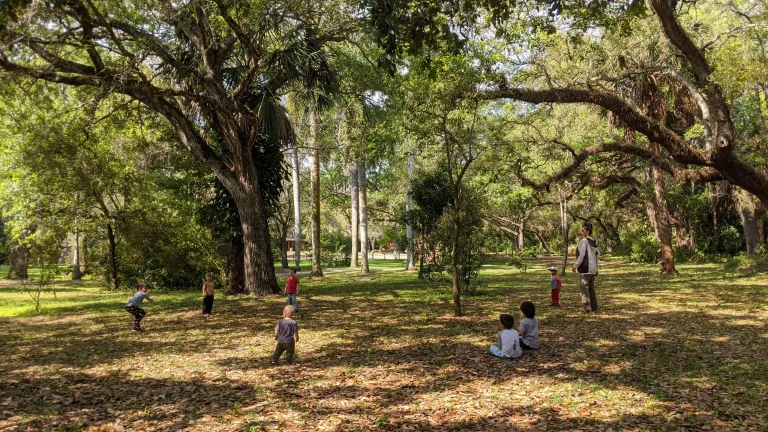

Why Nature Based Learning?
Nature is a teacher, a healer, and a constant reminder of the beauty and resilience that exists within and around us. It is an invitation to explore, to learn, and to be inspired. There are endless opportunities that nature so graciously provides for exploration, observation, and creative expression. It gives a vast canvas, allowing each of us to channel our emotions, tell stories, and evoke a sense of wonder.
Human beings possess remarkable intelligence and potential, yet when confined to an environment devoid of sensory stimulation, their cognitive abilities can be hindered. The absence of natural stimuli can limit our creativity, problem-solving skills, and overall mental well-being. This is where nature based education comes in. It nurtures both the scientist’s thirst for knowledge and the artist’s desire for creative fulfillment.
The bullet train in Japan showcases the remarkable ingenuity of engineers who drew inspiration from nature’s brilliance. By observing the kingfisher bird’s ability to swiftly catch fish with minimal disturbance in the blink of an eye uncovered a valuable lesson in efficiency. With meticulous attention to detail, the engineers carefully crafted a sleek and streamlined nose for the train, similar to the kingfisher’s beak. This innovative adaptation enabled the train to cut through the air effortlessly, significantly reducing noise, vibrations, and resistance. The bullet train now glides along the tracks, effortlessly piercing through the air at incredible speeds. Passengers aboard the train witness the fusion of nature and technology.
Nature-based learning is an educational approach that emphasizes the integration of the natural environment into the learning process. It involves engaging with nature as a context and resource for teaching and learning across various subjects and disciplines. Nature-based learning offers numerous benefits to students.
Benefits:
- Nature-based learning encourages outdoor physical activity, reducing sedentary behaviours associated with traditional classroom settings. It provides opportunities for stress reduction, improved focus, and promoting overall student well-being.
- Students are encouraged to explore and interact with the natural world firsthand. This hands-on approach fosters curiosity, observation skills, critical thinking, and problem-solving abilities.
- Engaging all five senses through exploration and creativity enhanced the learning experiences for the students of all kinds of learning styles.
- It allows learners to develop a deeper understanding of ecological concepts, natural systems, and environmental issues by directly experiencing and studying them in their natural settings.
- Engaging with nature stimulates imagination, encouraging students to explore their creativity through various mediums such as art, music, writing, and performance.
- Nature-based learning often involves group activities and outdoor challenges that require collaboration and teamwork.
- Spending time in nature encourages individuals to disconnect from distractions, tune into their own thoughts and emotions, and develop a deeper understanding of themselves. This self-awareness enhances emotional intelligence, empathy, and the ability to lead with authenticity and empathy.
By immersing ourselves in nature’s classroom, we can deepen our understanding of ourselves, our connection to the Earth, and the wisdom that resides in the natural world.